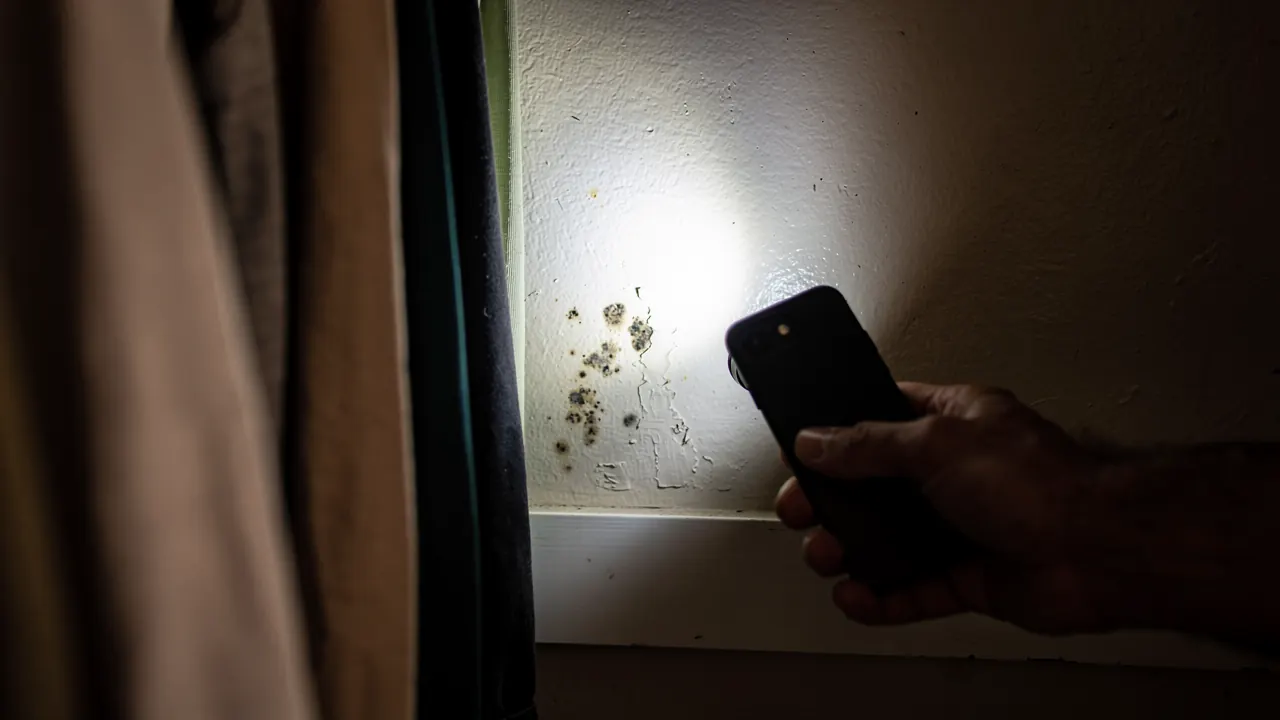
Knowing what to do if you find mold in your house matters mostly because the instinctive moves are the wrong ones. Scrubbing releases spores. Bleach on drywall whitens the stain while the colony keeps living in the paper and the cavity behind it. Pointing a fan at it broadcasts the problem through the house. In Santa Clarita, finding mold carries an extra message: this is a dry valley, so growth almost always means hidden water — a leak, a seep, condensation — that's still active. Here's the order of operations, and when the smart move is simply calling (661) 744-2344 to talk it through with a local pro.
Two minutes describing what you found gets you an answer a webpage can't give: whether yours is a Saturday project or a real remediation.
Call (661) 744-2344 NowFirst Moves — and the Moves to Skip
Do: take photos before touching anything (they matter for insurance and scoping); look for the water source — check under nearby sinks, look at the ceiling above, feel the floor for warm or damp spots; shut off water to an obviously leaking fixture; close the door to the room if you can; and turn off HVAC if the mold is near a register or return, so the system doesn't circulate it.
Don't: scrub, spray bleach, rip out material bare-handed, run fans at it, or paint over it. A patch smaller than a few square feet on a hard, non-porous surface with a fixed cause is at the outer edge of reasonable DIY — anything on drywall, anything recurring, and anything you can smell but not see belongs with someone equipped for it.
Musty Smell but No Visible Mold
This one is common in the valley's tighter, newer construction: a persistent musty odor — often strongest when the AC kicks on or in one specific room — with nothing to look at. Trust the nose. Odor means active growth somewhere air travels: a wall cavity, under flooring, in ductwork. Hunting it by demolition is expensive; professional inspection with moisture meters and thermal imaging finds it without tearing the house apart. Mention on the call when the smell is strongest — that detail genuinely narrows the search.
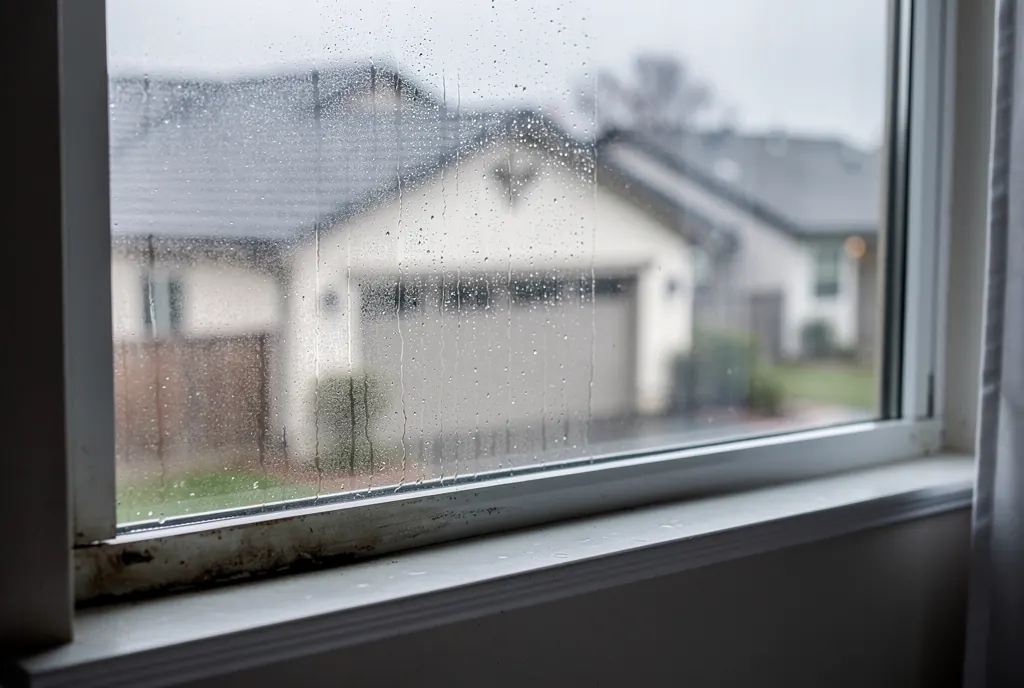
Disturbing mold spreads spores before anyone can contain it. Leave it alone, close the door, and make the call instead.
Call (661) 744-2344 NowHow Fast Does Mold Spread After a Leak?
Faster than cleanup schedules usually assume. Wet drywall and wood can begin supporting growth within 24 to 48 hours, visible colonies commonly follow within one to two weeks, and a leak that runs unnoticed for a month has typically involved the wall cavity, not just the surface. The practical takeaway: if you know something got wet — an appliance failure, an overflow, a storm leak — the cheapest moment to act is now, while it's still a drying job rather than a removal job. Dark growth that's already established is covered on the black mold page, and the cost guide shows how scope drives price.
When to Call a Mold Remediation Professional
Call when any of these is true: the patch is bigger than a bath mat, it's on drywall or another porous material, it came back after cleaning, you can smell it but not find it, or it followed a known water event. One clarity note before you dial: this site is a free call-connection service, not a contractor — you'll be connected with independent local pros serving the Santa Clarita Valley, and you hire and verify them directly. The conversation costs nothing and usually settles in two minutes whether you have a Saturday project or a real remediation. Call (661) 744-2344, describe what you found and what's wet, and get a straight answer — the full service picture is on the homepage.
Describe the stain, the smell, and anything that got wet nearby. A local pro can usually tell you over the phone what it's likely to be.
Call (661) 744-2344 Now